In April of 2020, I worked alongside my peers at Ryerson University to connect and support the Nibinamik First Nation community located north of Thunderbay.
This was truly an an eye opening and rewarding learning experience.
I have decided to share their story and the resources found in hope is helps others. Furthermore, I hope their voices are heard and all their dreams for a better future come true.
Canada, we can do better. ❤️
Take a moment to learn more about Finding Our Power Together and hear the voices of the youth below.
Today I had the honour of facilitating a professional development session entitled- Purposeful, Planned, Yet Flexible, Play at the Wee Wonder Conference held by DPCDSB and the CDRCP! #DPWee1dr19 Great day spent with so many dedicated early years educators!
An amazing feeling came over me last that night and I felt compelled to write and share;
Today Diane Kashin asked the Wee Wonder Conference group where their happy place was as a child?
At that moment I couldn’t answer as I was focused on prepping for my my upcoming presentation. Tonight I asked myself that question again, “Where was my childhood happy place? 💭
After just a few moments the answer was clear, the large tree in my back yard! I remember I used to climb, sometimes hide in the branches filled with green leaves. Try to climb as high as I could in hopes I would reach the very top. I knew I was capable of reaching the highest, strongest branch. It was risky, but I knew my limits and I was familiar with this particular tree.
I would think to myself “Is this what the birds see?”
There were moments I would stay perfectly still as small birds would fly in and out of the tree. I can hear my mom calling my name, and sense my brother was playing below near by.
Thank you Diane for that memory, and for the that brief moment I was in tune with myself as a child.
What did you hear last week? What did you notice? Here are some ideas to extend and provoke new learning!
Evaluate your classroom and program, are the children still enjoying what was set out last week? Where are the children engaged and learning? What learning areas are not being visited? You do not have to change the entire room, only change what is not working! If it is not broke…don’t fix it! 😉
Let’s take a closer look at The Kindergarten Program 2016 Overall Expectations:
(BC − Belonging and Contributing SRWB − Self-Regulation and Well-Being DLMB − Demonstrating Literacy and Mathematics Behaviours PSI − Problem Solving and Innovating) (The Kindergarten Program Document)
From just one play experience, we can gain a lot of information about what learning is taking place based on the four frames. While observing the children engaged in play and by documenting their learning, we are able to capture learning and share learning with parents and other educators. The documentation collected is used by educators to reflect and gain insight into the children’s learning. This will contribute to the educators’ assessment of this inquiry.
All four frames are all evident in our Fire Truck Project and identified using the following Kindergarten Program Overall Expectations(OE):
Belonging and Contributing:
OE 1. communicate with others in a variety of ways, for a variety of purposes, and in a variety of contexts
OE 3. identify and use social skills in play and other contexts
OE 4. demonstrate an ability to use problem-solving skills in a variety of contexts, including social contexts
OE 22. communicate their thoughts and feelings, and their theories and ideas, through various art forms
OE 26. develop an appreciation of the multiple perspectives encountered within groups, and of ways in which they themselves can contribute to groups and to group well-being
OE 30. demonstrate an awareness of themselves as dramatists, actors, dancers, artists, and musicians through engagement in the arts
OE 31. demonstrate knowledge and skills gained through exposure to and engagement in drama, dance, music, and visual arts
Self-Regulation and Well-Being
OE 1. communicate with others in a variety of ways, for a variety of purposes, and in a variety of contexts
OE 2. demonstrate independence, self-regulation, and a willingness to take responsibility in learning and other endeavours
OE 3. identify and use social skills in play and other contexts
OE 4. demonstrate an ability to use problem-solving skills in a variety of contexts, including social contexts
OE 8. develop movement skills and concepts as they use their growing bodies to move in a variety of ways and in a variety of contexts
OE 22. communicate their thoughts and feelings, and their theories and ideas, through various art forms
Demonstrating Literacy and Mathematics Behaviours
OE 1. communicate with others in a variety of ways, for a variety of purposes, and in a variety of contexts
OE 9. demonstrate literacy behaviours that enable beginning readers to make sense of a variety of texts
OE 10. demonstrate literacy behaviours that enable beginning writers to communicate with others
OE 14. demonstrate an awareness of the natural and built environment through hands-on investigations, observations, questions, and representations of their findings
OE 17. describe, sort, classify, build, and compare two-dimensional shapes and three-dimensional figures, and describe the location and movement of objects, through investigation
OE 19. collect, organize, display, and interpret data to solve problems and to communicate information, and explore the concept of probability in everyday contexts
OE 21. express their responses to a variety of forms of drama, dance, music, and visual arts from various cultures and communities
OE 22. communicate their thoughts and feelings, and their theories and ideas, through various art forms
Problem Solving and Innovating
OE 1. communicate with others in a variety of ways, for a variety of purposes, and in a variety of contexts
OE 4. demonstrate an ability to use problem-solving skills in a variety of contexts, including social contexts
OE 9. demonstrate literacy behaviours that enable beginning readers to make sense of a variety of texts
OE 10. demonstrate literacy behaviours that enable beginning writers to communicate with others
OE 13. use the processes and skills of an inquiry stance (i.e., questioning, planning, predicting, observing, and communicating)
OE 22. communicate their thoughts and feelings, and their theories and ideas, through various art forms
OE 24. use technological problem-solving skills, on their own and with others, in the process of creating and designing (i.e., questioning, planning, constructing, analysing, redesigning, and communicating)
Taking a closer look at the individual children, let’s look at the Kindergarten Program Specific Expectations (SE). Here are just a few of the pictures taken that represent some of the specific expectations met during this inquiry.
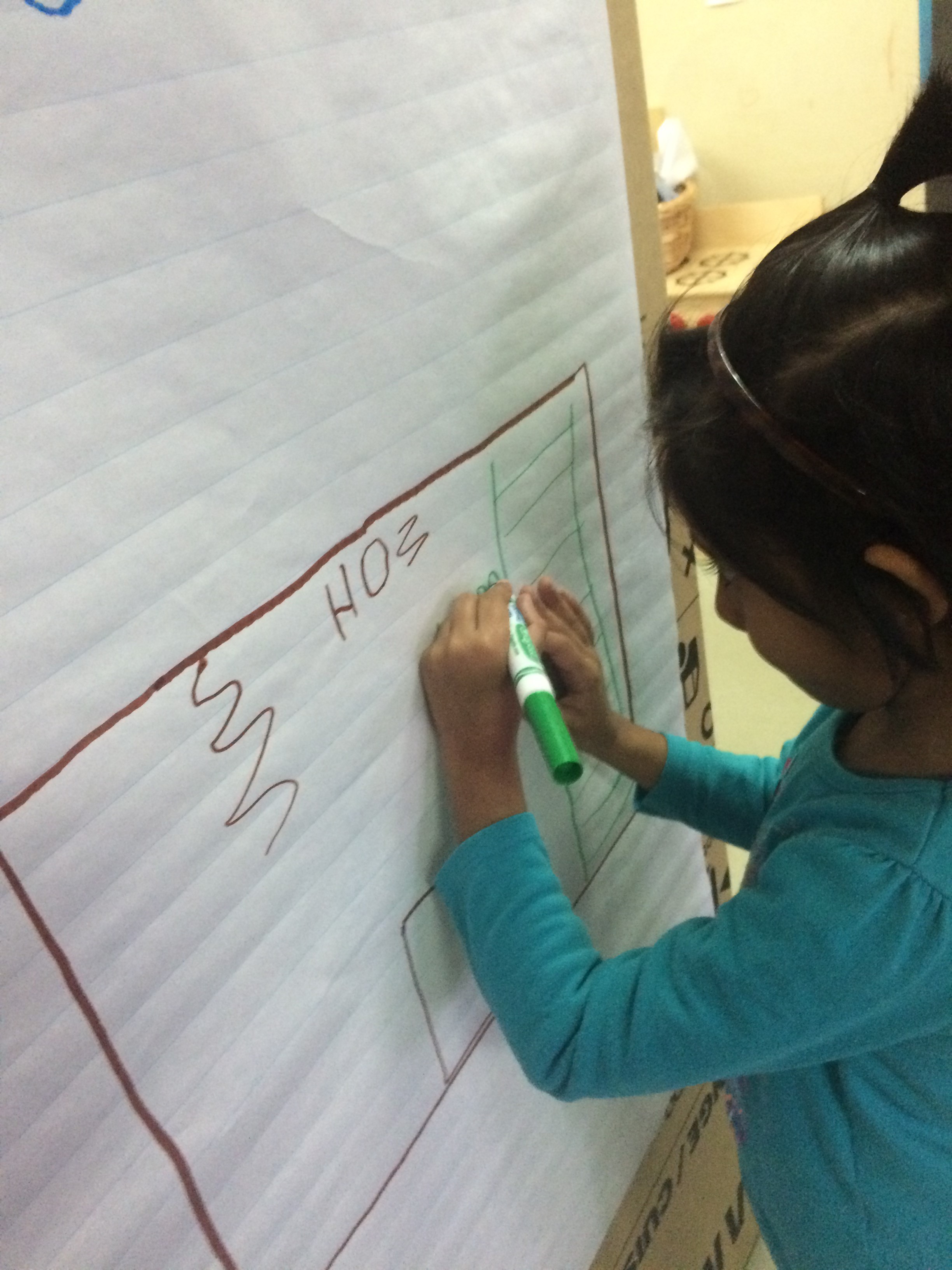
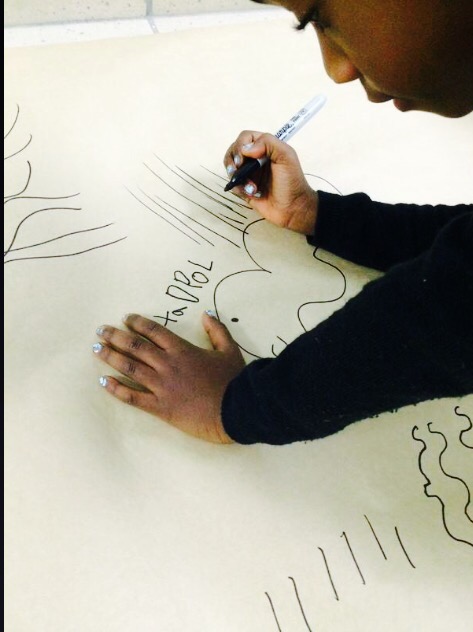
During a large group discussion, Little H contributes an idea to the fire truck plan. Her peers work with her to sound the word “hose” out.
SE1.2. listen and respond to others, both verbally and non-verbally
Little A uses familiar letters and sounds to spell the word “wheel.”
SE 9.1. use reading behaviours to make sense of familiar and unfamiliar texts in print
As the students collaboratively paint the fire truck box, they discuss prior knowledge and experiences with community helpers.
SE 25.3. express their thoughts
As the children take on the role of firefighters, conversation can be over heard as they retell Robert Munsch’s “The Fire Station.”
SE 23.4. communicate their understanding of something (e.g., a familiar story, an experience, a song, a play) by representing their ideas and feelings through the arts
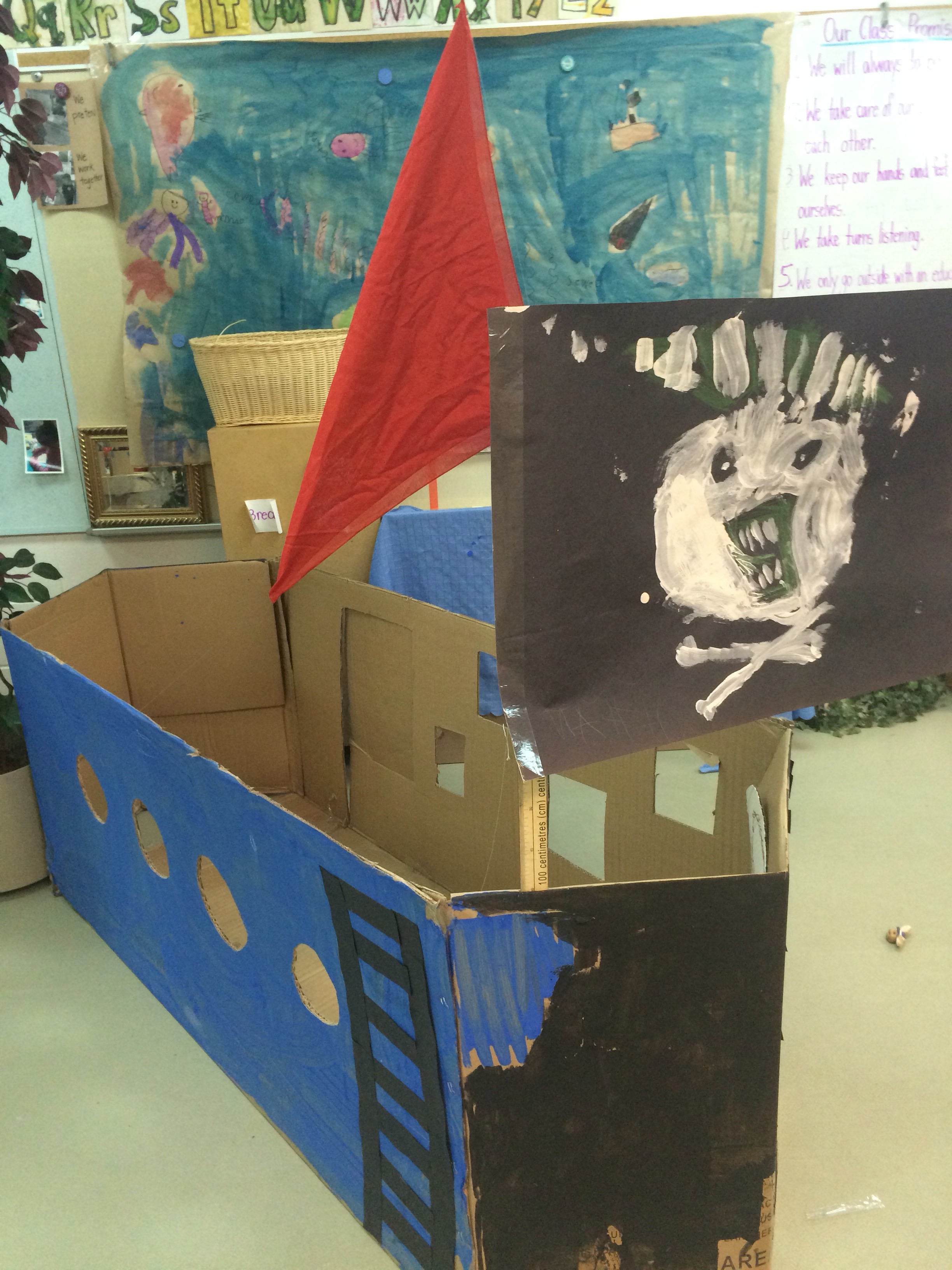
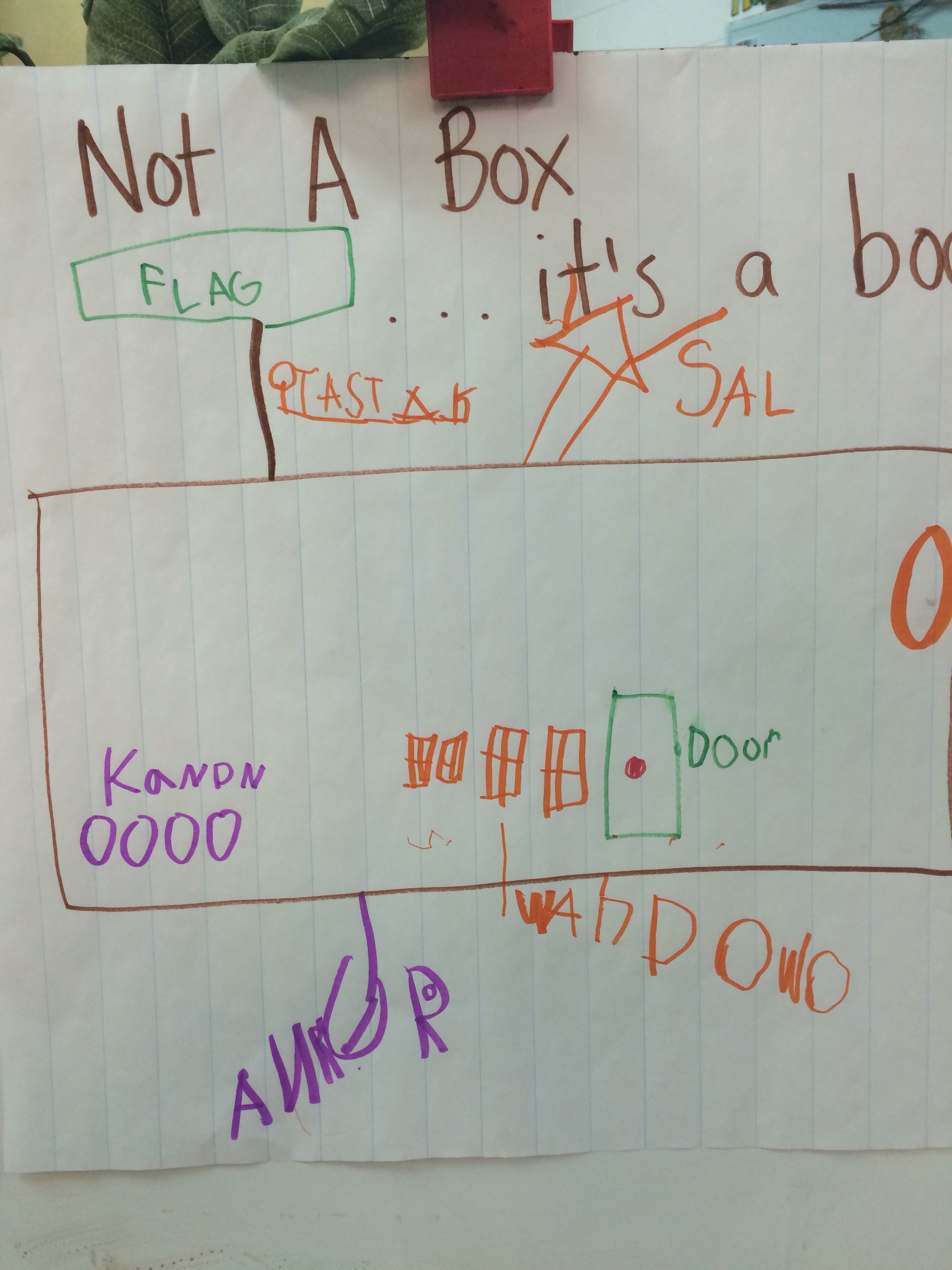
We begin with a plan and educators provide a large box. The children quickly decide as a group what their boat will need first. Little Mr. C raises his hand and says, “Windows!” So the educator responds, “You’re right! A boat should have windows…but how many and what shape?” Little Mr. C says, “4 square ones.” Then little Mr. M shares, “The boat needs a door so we can get in.” So the educator curiously asks,”What shape of door would you like?” Several children call out, “Rectangle!”
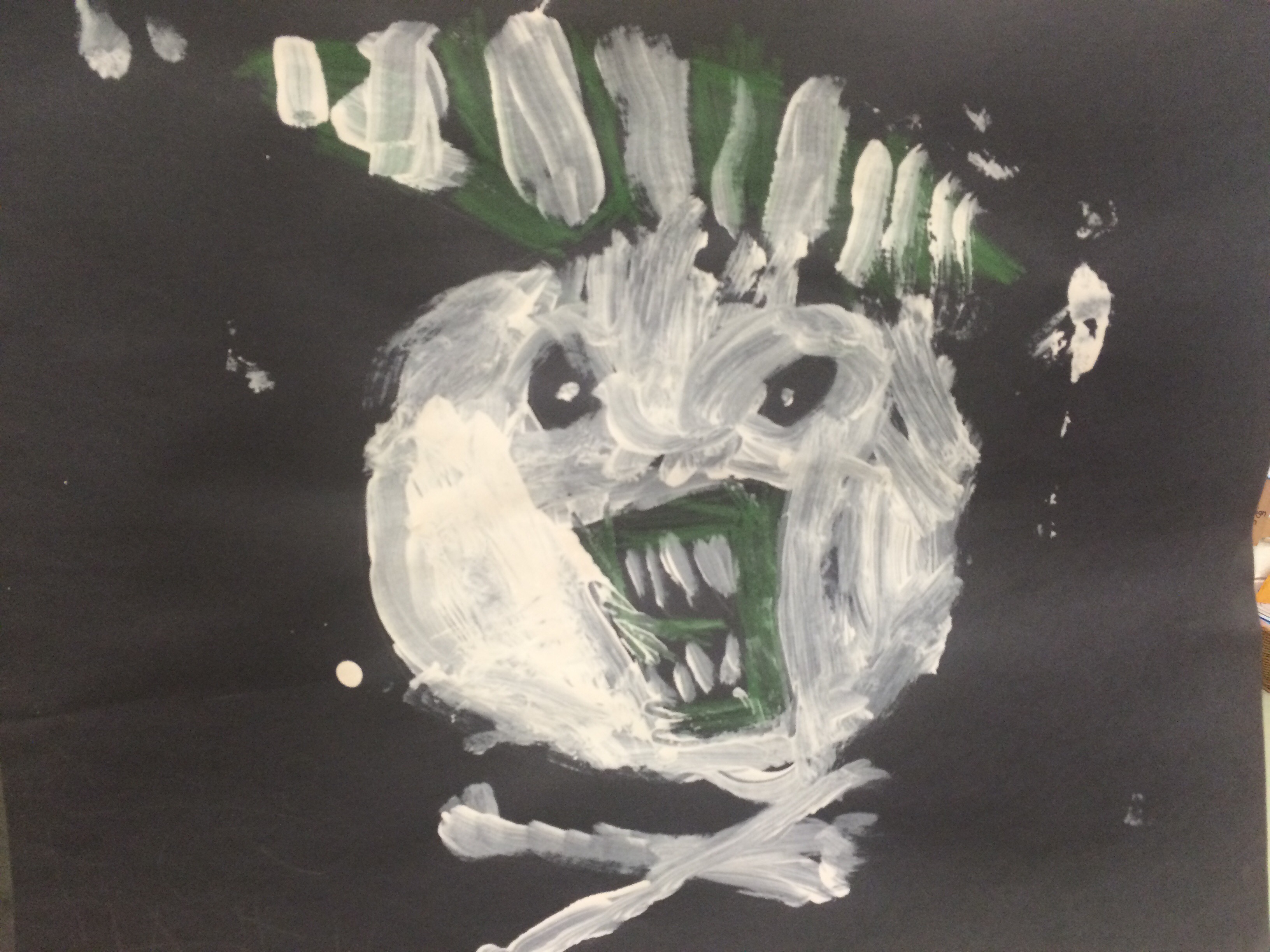
Little Miss J then raises her hand and says, “Can we make a pirate flag?” And the educator responds by saying, “Of course! Those who are interested in helping make our flag, can join me at the Creative Table during playtime and we can design and make one together.”
(Looks like a pirate flag to me…kinda resembles “Wilson” the volleyball from the movie Castaway 😊)
The next day, the children seem very eager to explore the boat they have created so far. But the educators pose a problem (the role of the de-facilitator) and ask, “I’m not sure I’m ready to get into this boat, how will we move and stop?” Little Mr. J responds by saying, “We could make an anchor.” The educator inquires, “Well, what would an anchor do?” Little Mr. J says, “It stops the boat!”
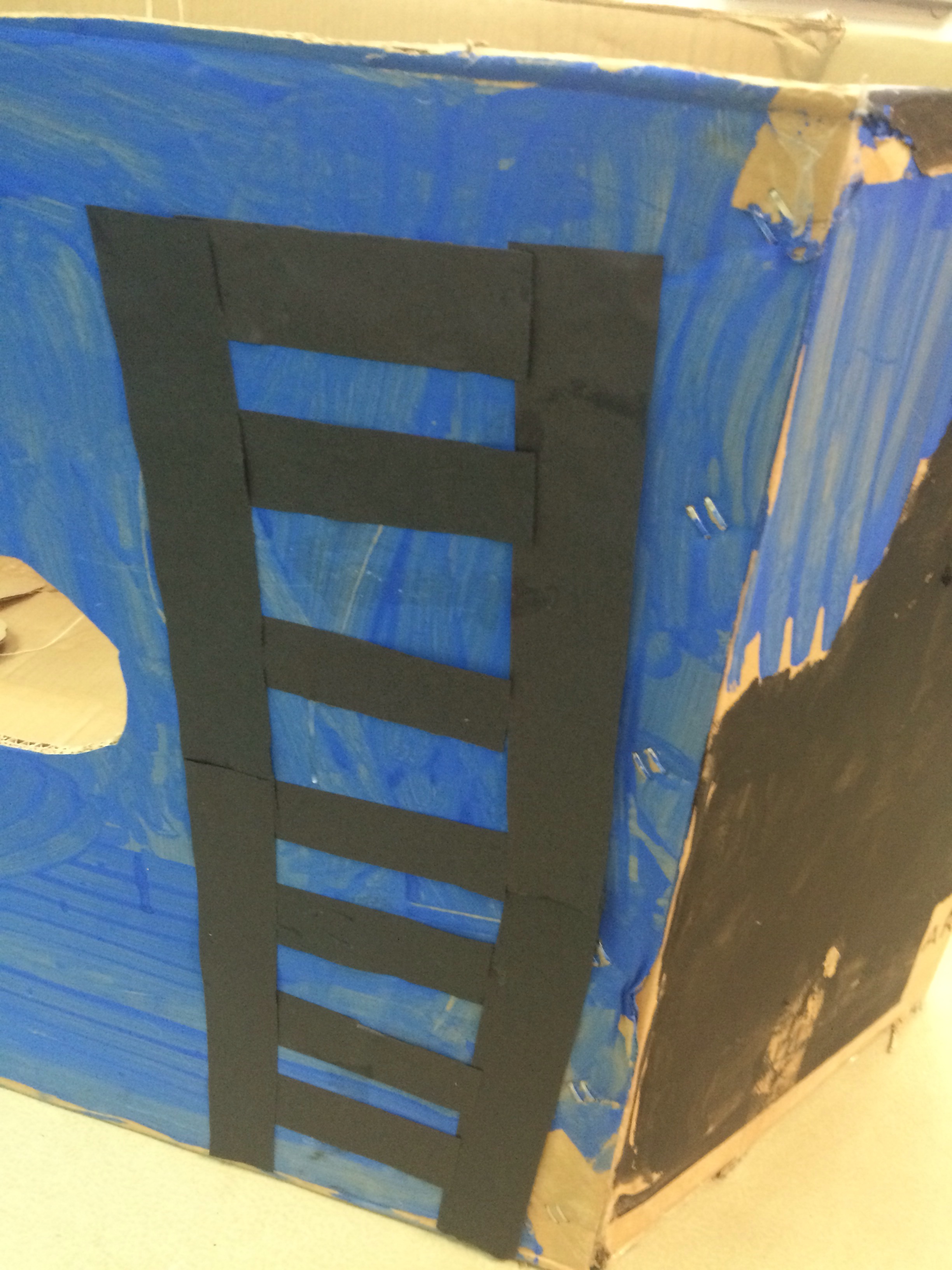
As the children go off and play, our boat researchers use the computer in our classroom to take a closer look at some images and information about boats and pirate ships. They decided we also need a ladder to climb aboard just in case we have to “walk the plank.”
Our “Pirate Ship” is almost ready….but we still need water to sail on. A group of children talk to one another about what the ocean looks like, what plants and animals we might find in the water. A perfect representation of how when educators focus on intellectual skills, we naturally drive academic skills. (Lillian Katz)
Beautiful! Together we make a few pirate hats, and our fabulous lunch room supervisor bring us in some eye patches….and it is time to set sail!!
(We also have discovered this little song and dance on YouTube…the children love it! A Pirate You Shall Be )
During morning free play on November 30, 2015 little Mr. M approached an Educator to share a design he created on a piece of paper. The design was simple, a few lines connected together with a title across the middle that read “Ball Maze”.
As Little M shared his idea during our “Sharing Time” with peers, Little Mr. L instantly put up his hand and said “I like your ball maze” he then smiled. Over the next couple of days educators began to collecting loose parts and various materials that might aid the boys to carry through with their idea. When various materials were provided throughout the classroom, Educators said to the boys “Would you like to build your own ball maze? What do you think we might use?”
The two children instantly sprang into acton and started to search the room to find the materials they wanted to use. When they had a collection of materials the boys were then asked to make a new plan.
These are the materials they found and selected throughout the classroom;
– 12 paper towel roles
– 2 plastic cones (creative zone)
– 7 CPVC fittings
– 1 cotton ball
– 1 marble
– 1 tennis ball
– masking tape
– scotch tape
– packaging tape
– 1 large piece of cardboard
Each boy began to draw.
This is amazing evidence of how intellectual skills drive academic skills (Lilian Katz)